
Corner Brook, NL – Where Climate Efforts Are Getting a Boost from Net-Zero Benchmarking

By Deepa Shankaran, Writer, editor and storyteller
Kirstin Mercer is Sustainable Development Coordinator for Corner Brook, in Newfoundland and Labrador. A department of one, she leads a city-wide mission: integrating climate action across municipal operations. In July 2024, she marked her first year in the role and was proud of the progress underway, from the annual spring cleanup to the land use policies that prioritize sustainability.
But despite the momentum, big questions remained: Where does Corner Brook stand? And where does it go from here?
That’s when Kirstin discovered QUEST Canada’s NCA program, delivered across the province in partnership with econext. Launched in 2023 and now active across Atlantic Canada, the Prairies, and Ontario, the program’s services are designed to help small and mid-sized municipalities develop local energy and emissions reduction plans.
And it offered exactly what she’d been looking for: a structured, data-driven way to assess Corner Brook’s climate efforts and chart a clear path forward.
Promises made and challenges to face
“We have great policies and bylaws, but they’re outdated,” explains Kirstin, noting that the city’s sustainability action plan was developed in 2019. “The community has changed a lot since then. I really wanted us to understand where we are now, based on the promises we’ve made and the challenges we’re facing.”
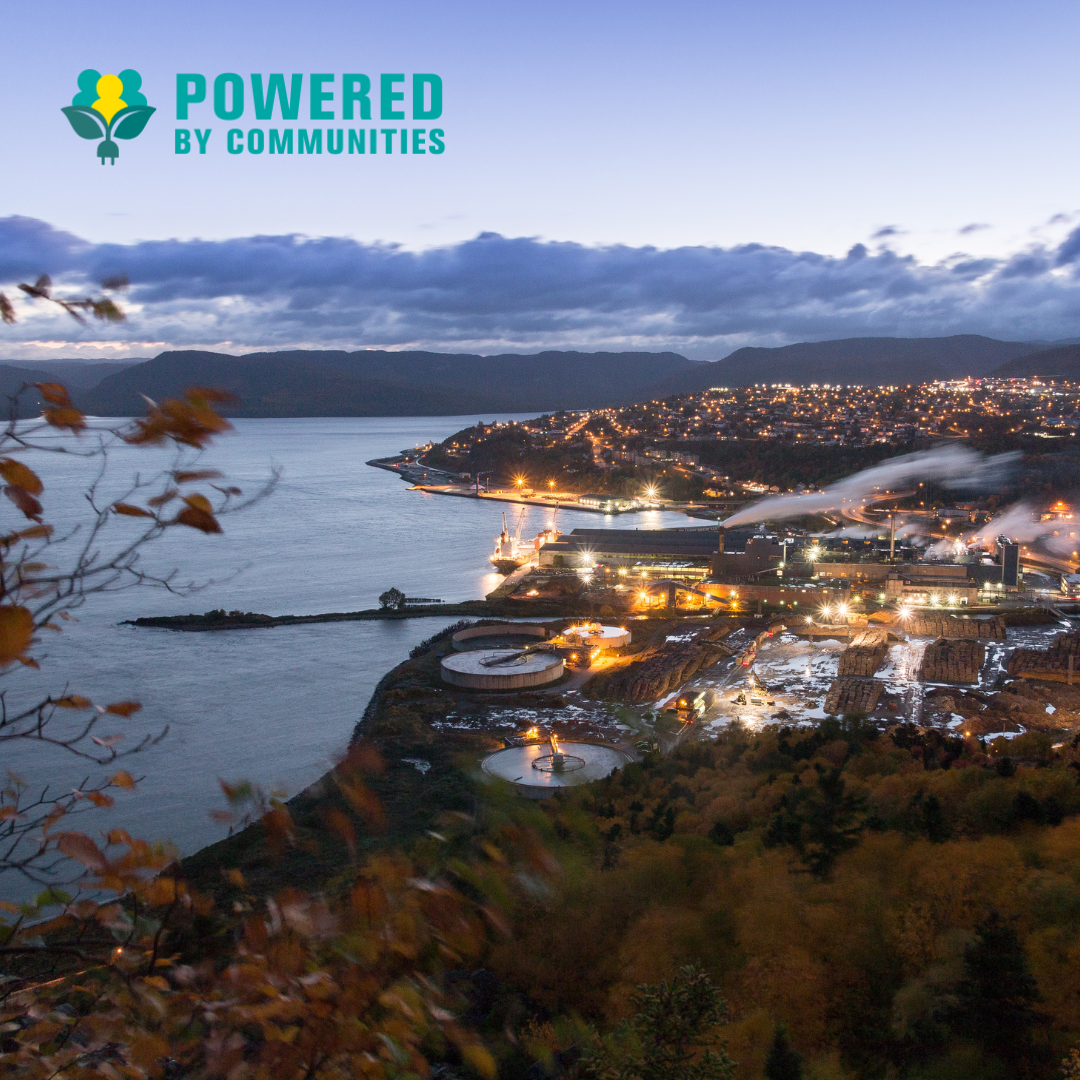
Located on the island of Newfoundland’s west coast, at the mouth of the Humber River, Corner Brook is the province’s second-largest city, home to nearly 20,000 residents. Known for its dense forests and rugged coastline, it’s also vulnerable to growing climate risks, including coastal erosion, flooding and wildfires.
The Net-Zero Communities Accelerator program provides communities with expert guidance and practical tools to advance climate goals while also delivering local benefits related to economic growth and lower energy costs. At the heart of the program is the benchmarking process. It evaluates a community’s current climate actions against proven strategies that boost resilience, cut emissions and strengthen local economies.
“When QUEST told me what they were offering – to look at our projects and be able to give us an actual score – it made me realize how much room we had to grow,” says Kirstin.
A focus on the local capacity needed for climate action
The Benchmark Assessment Tool evaluates performance across ten indicators that define a Net-Zero Community – a community that integrates local, renewable and conventional energy sources to meet energy needs efficiently, cleanly and affordably. The first five indicators focus on the local capacity needed to support climate action, such as leadership, staffing and funding. The remaining five examine how energy infrastructure is managed to support efficient use, considering a range of factors including land use, transportation and water management.
Together, the ten indicators provide a clear snapshot of a community’s readiness to implement practical climate solutions.
As Projects Lead for QUEST Canada, Malsi Angekumbura supports benchmarking processes across communities in the Atlantic and Prairie provinces, and soon Ontario. She explains that the Benchmark Assessment Report is built to reflect the unique circumstances of each community – by examining local policies and projects, helping the community set clear goals, track progress, and adapt their strategies over time.
Benefits extend beyond emission reductions
“We take a bottom up approach to climate action,” Malsi says, “starting with where emissions actually come from.” She notes that, in Canada, communities are amongst the largest sources of greenhouse gas emissions, making them a critical starting point for change. “Top down decisions often miss the mark because they’re disconnected from what the community actually needs.”
QUEST works with municipalities to identify the root causes of their challenges and develop solutions that respond to conditions on the ground. The benefits extend beyond emissions reductions.
“Keeping solutions local means keeping dollars in the community,” Malsi points out. “This creates jobs and supports local economies.” Locally-tailored initiatives, such as active transportation and energy retrofits, can also improve public pride, health and well-being. “But,” she emphasizes, “the active participation of all stakeholders – council members, municipal staff and the broader public – is essential to developing plans that work.”
Support needed from other City teams
Although Kirstin Mercer would be leading the benchmarking initiative for the City of Corner Brook, she knew she would need the support of other teams. Armed with a list of key questions supplied by Malsi, she set out to gather insights about the City’s energy use and sustainability efforts. She found her colleagues eager to contribute.
“There was so much enthusiasm,” she recalls. “Many were hopeful and excited that we were finally taking this step.”
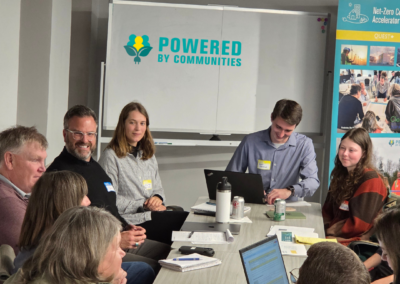
As Kirstin reached out to one department after another, she also stayed connected to the QUEST team. Alongside weekly check-ins with the organization’s sustainability lead, there were coaching sessions that brought together staff from other municipalities involved in the NCA Atlantic program.
“It was really valuable to hear what other communities in Newfoundland are doing,” Kirstin says. “Our populations might differ, but we have similar challenges. We’re all trying to improve our communities, and we can help each other.”
Score confirmed preservation work
When Corner Brook received its Benchmark Assessment Report in March 2025, Kirstin wasn’t sure what to expect. But she was encouraged to see the city’s overall score of – 66% – which told her they were on the right track.
Corner Brook’s highest score – 94% – was related to land use, and its municipal land supervisors were thrilled to hear the news. It confirmed that their work to preserve the region’s natural assets, through public engagement, development regulations and the pursuit of UNESCO heritage site designation, was having a positive impact.
“It felt like a pat on the back,” Kirstin says. “We’ve set goals and we’re reaching them. And we still have room to grow.”
Updating sustainability strategies
The city’s lowest score was related to the strategy indicator, which evaluates how energy plans are structured and communicated. This, for Kirstin and Malsi, highlights the need to update Corner Brook’s sustainability strategies in light of current realities. And to build broader public support for the effort.
Since the City received their Benchmark, Kirstin reports renewed momentum across departments, including progress on water conservation initiatives and disaster risk assessments. She plans to take a leading role in these projects and follow through on the report’s recommendations.
“This experience has really sparked our curiosity and a desire to do things differently,” she says, noting that innovation isn’t always embraced in every municipality. “Corner Brook is very supportive. If things aren’t working the way we wanted, we’re willing to try something new.”
ABOUT THE AUTHOR

Deepa Shankaran
Deepa Shankaran is a writer, editor and producer specializing in storytelling for non-profit organizations. She partners with international and community agencies to create content that engages supporters and inspires meaningful action. Deepa lives in Toronto, ON.
About Powered by Communities
Established in 2017, Powered by Communities is an awareness-raising, communications and media platform that highlights and celebrates local community energy initiatives taking place across the country, from coast to coast to coast. The platform inspires, informs and engages its readership with stories and articles detailing community energy initiatives being led by local governments, municipalities, Indigenous communities, community groups, non-profits, charities, and enterprising individuals.

About QUEST Canada
QUEST Canada is a registered Canadian charity that supports communities in Canada on their pathway to net-zero. Since 2007, we’ve been facilitating connections, empowering community champions and advising decision-makers to implement energy use and emissions reduction solutions that best meet community needs and maximize local opportunities. We develop tools and resources, convene stakeholders and rights holders, and advise decision-makers — all with the goal of encouraging, assisting and enabling communities to contribute to Canada’s net-zero goals.
Support local communities by sharing this story
MORE FROM POWERED BY COMMUNITIES



Sign Up
Join the Conversation!
Sign up to get the latest news and updates about QUEST Canada events and receive QUEST Canada's monthly newsletter.