
The Burchill Wind Project and the Tobique First Nation – Not just stakeholders, but rights-holders and innovators
By Aaliyah Lahai, Lead, Community Energy Planning & Projects, QUEST Canada
Land is more than a physical space, it is the living cradle from which culture, economy, and knowledge systems emerge. In many Indigenous and diasporic world views, land exists within the concept of the Commons: a shared and sacred responsibility, a space of reciprocal care, and a reflection and connection of one’s being. Through this lens, we understand relationality: how people, knowledge, and resources are intricately interwoven.
“Land holds spirit” is a core teaching my West African grandparents would echo from previous generations. “We must breathe in unison.”
Through the trees, waters, and air, a resounding harmony envelopes the efficacious teachings of Koluskap, echoing triumphantly through the enduring strength of Mi’kmaq, Wolastoqey, and Peskotomuhkati communities, the Wabanakiyak, members of the Wabanaki Confederacy.
Colonial doctrines and land dispossession
Colonial expansion by European settlers was often justified through legal fictions such as the Doctrine of Discovery and the concept of terra nullius. These frameworks claimed land not “occupied” by European standards was empty and therefore available for seizure. This erasure ultimately invalidated Indigenous governance, cultural traditions, and land recognition, laying the groundwork for systematic land dispossession.
Within this logic, Indigenous territories were reduced to economic landscapes, feeding the settler-colonial appetite for expansion and resource extraction. The forced subdivision of land stripped communities of autonomy, embedding long-standing inequalities.
These colonial doctrines were further institutionalized in policies like the Indian Act of 1876 which constructed sweeping authority to the Canadian federal government over Indigenous status, governance, land, and cultural practices. It attempted to forcibly assimilate First Nations into settler society, dismantling systems of self-determination. Additionally, colonial land management ignored Indigenous worldviews and systems of stewardship. It severed communities from their territories, disrupted cultural continuity, and imposed systemic barriers that still echo through education, health, and economic development today.
A shifting energy landscape
Any discussion of climate resilience or energy expansion must begin here, with the recognition that Indigenous communities have long borne the brunt of resource extraction. Now, in an era of green transitions, Indigenous leadership offers a compelling alternative vision of sovereignty, sustainability, and relational stewardship.
Today, Atlantic Canada is at a crossroads. Provincial leaders are advancing ambitious energy agendas, positioning the region as a future powerhouse in Canada’s energy economy in Ottawa. Early this year, Nova Scotia Premier Tim Houston declared that his government would prioritize natural resources, stating, “[we] can’t expect Nova Scotia to prosper when we ban industry after industry after industry.” Plans to revisit fracking, uranium mining, and coastal fossil fuel extraction reflect a broader national undercurrent and shift toward domestic resource independence and export expansion.
Across the region, from Newfoundland and Labrador’s offshore oil developments to green hydrogen projects and critical mineral mining, Atlantic Canada is becoming a key player in global energy markets. This push is partly driven by geopolitical volatility, such as the incalculable threat of tariffs from southern neighbours, catalyzing a national energy pivot toward Europe and Asia as alternative markets.
Former Premier of Newfoundland and Labrador Andrew Furey went so far as to call the province the future “energy capital of North America,” backed by major industry investments like ExxonMobil’s $1.5 billion in offshore infrastructure. However, these moves are not without controversy; they have prompted concern among fisheries, rural communities, and Indigenous nations over impending environmental risks, jurisdictional overreach, and long-term climate consequences.
Within the environmental and territorial landscapes that cradle us, urgent questions emerge in light of the enduring colonial architecture that shapes this region: Whose vision of development is being advanced? And what are the implications when so-called ‘green’ initiatives replicate the extractive logics of colonial capitalism?
Indigenous energy sovereignty and renewable energy
Against this backdrop, Indigenous-led renewable energy projects represent a countercurrent – one grounded in community ownership, ecological balance, and self-determination.
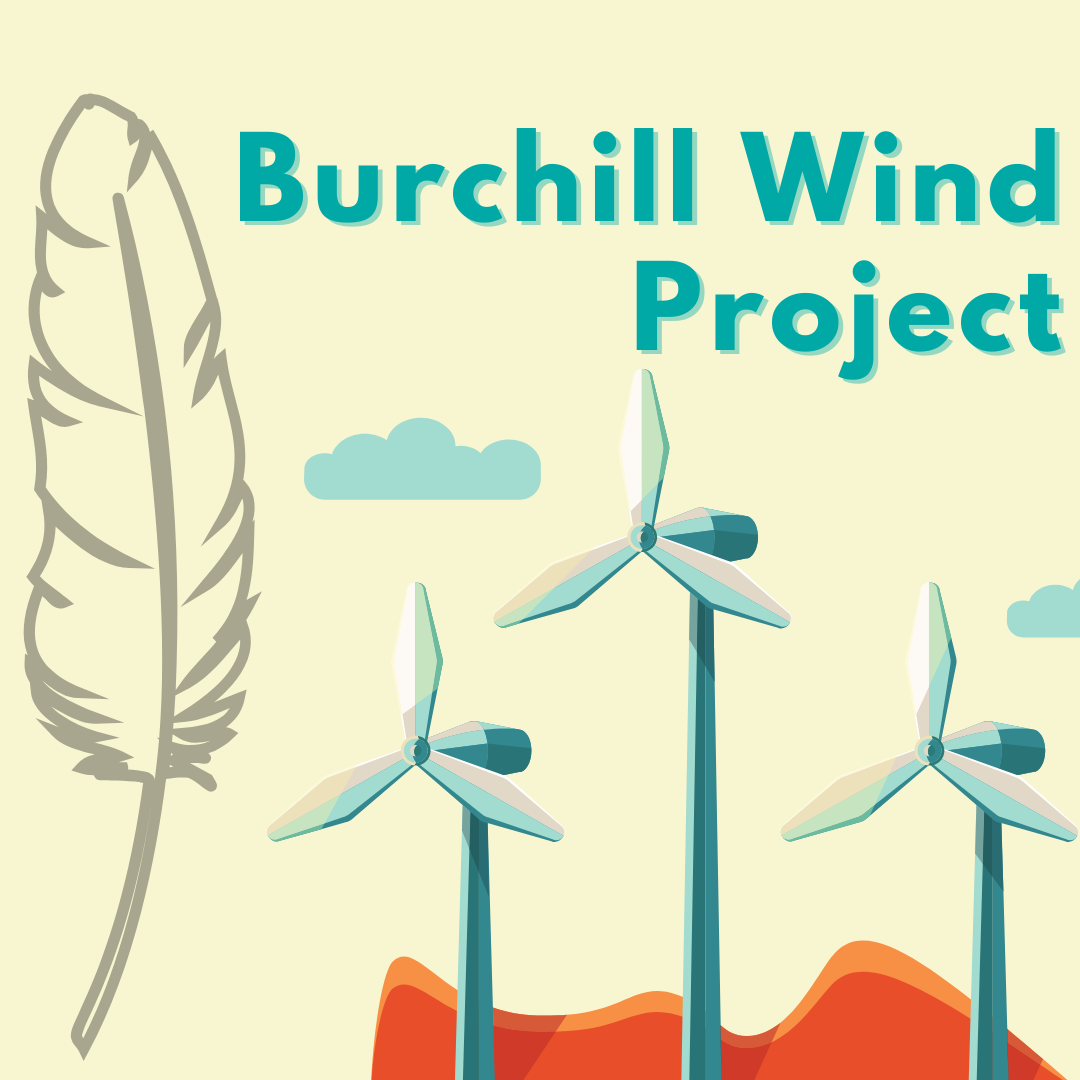
The Burchill Wind Project, located near Lorneville, New Brunswick, is a model of this alternative pathway. With ten turbines generating 42 megawatts – enough to power over 10,000 homes – it represents a landmark in Indigenous-led renewable development.
At the heart of the project is a partnership between the Tobique First Nation (Neqotkuk) and Natural Forces, forming the Burchill Wind Limited Partnership. Tobique First Nation holds majority ownership, a milestone in economic self-determination.
The development prioritized environmental stewardship and community engagement. An Indigenous Knowledge Study guided the project’s ecological design and led to the naming of its access route as Pisunawtik Road, or “Medicine Road” – an homage to the land’s ancestral significance.
Backed by nearly $50 million in federal funding through Natural Resources Canada’s Smart Renewables and Electrification Pathways Program, the project became operational in June 2023. It now supplies 15% of Saint John’s energy needs under a 25-year agreement with Saint John Energy, ensuring clean energy and stable electricity prices.
Trust, time, and true collaboration
Austen Hughes of Natural Forces credits the project’s success to nearly a decade of relationship-building with partners Tobique First Nation (Neqotkuk).
“Had we approached Tobique First Nation with a project proposal right away, without first building trust, they never would have worked with us,” shares Austin.
This foundation of trust enabled equitable decision-making, long-term planning, and the creation of a community benefits fund supporting youth, education, and community programming. Contractors were also encouraged to prioritize Indigenous employment, expanding the project’s economic and social impact.
Crucially, Austen underscores the value of predictable, long-term revenue: “Wind energy, while intermittent, is steady across decades. That reliability creates financial certainty for investing in our communities.”
Reframing prosperity and energy justice
In a moment where Atlantic Canada is being cast as the “next great energy frontier,” projects like the Burchill Wind Project call on us to expand our definition of prosperity. They offer a decolonial approach to development, where land is not merely a commodity, but a living relation – where profit is measured not only in dollars, but in community capacity, ecological care, and cultural resurgence.
As federal incentives continue to flow into green energy and provinces eye offshore expansion and LNG exports, there remains an urgent need to centre Indigenous leadership – not just as stakeholders, but as rights-holders and innovators.
ABOUT THE AUTHOR

Aaliyah Lahai
Aaliyah holds a B. Sc. in Microbiology and Immunology, Sustainability, and a certificate in Environmental Impact Assessment from Dalhousie University. From a young age, the intersection of technology and environmental science has always fascinated her. This passion led her to pursue a career at the crossroads of climate justice and innovation. In the non-profit sector, Aaliyah has worked on several research projects and committees addressing community development through interdisciplinary collaboration, to reveal interwoven perspectives and experiences within the intersections of environmental, social and economic systems. She lives in Moncton, NB.
About Powered by Communities
Established in 2017, Powered by Communities is an awareness-raising, communications and media platform that highlights and celebrates local community energy initiatives taking place across the country, from coast to coast to coast. The platform inspires, informs and engages its readership with stories and articles detailing community energy initiatives being led by local governments, municipalities, Indigenous communities, community groups, non-profits, charities, and enterprising individuals.

About QUEST Canada
QUEST Canada is a registered Canadian charity that supports communities in Canada on their pathway to net-zero. Since 2007, we’ve been facilitating connections, empowering community champions and advising decision-makers to implement energy use and emissions reduction solutions that best meet community needs and maximize local opportunities. We develop tools and resources, convene stakeholders and rights holders, and advise decision-makers — all with the goal of encouraging, assisting and enabling communities to contribute to Canada’s net-zero goals.
Support local communities by sharing this story
MORE FROM POWERED BY COMMUNITIES

Sign Up
Join the Conversation!
Sign up to get the latest news and updates about QUEST Canada events and receive QUEST Canada's monthly newsletter.