
Enabling Low-Carbon Energy Projects for Investment
This project is led by:

QUEST Canada Publishes New Report Detailing How Canadian Communities Can Overcome Barriers to the Low-Carbon Energy Transition
QUEST Canada recently published a new report, Enabling Low Carbon Energy Projects For Investment. The report is part of a broader research project that aims to support Canadian communities as they overcome barriers associated with the low-carbon energy transition. Lire le communiqué de presseProjet
Project Objectives & Outcomes
The Enabling Low Carbon Energy Projects for Investment (ELCEPI) project aims to add resolution to the capitalization challenges relating to community low-carbon energy projects and link discovered barriers and enablers to more significant social movements as a means to synergize and advance both low-carbon energy deployment and other social activities in parallel to one another.
Given the dynamic nature of this research project and the importance of staying abreast of emerging insights, the ELCEPI research objectives underwent multiple iterations. Through this process, research findings have discovered that many communities face significant barriers in the early stages of project conception with limited awareness and understanding of aggregation. As a result, we expanded the scope of our research to investigate barriers throughout a project’s life cycle.
Our early findings indicated that lower-income communities, particularly those with a history of marginalization and diversity, face unique challenges in project development. Moreover, we identified a disconnect between Indigenous and non-Indigenous projects. Based on our interviews and research, we settled on four final objectives, which appear disparate but are rooted in the interconnected and holistic goal of overcoming barriers to the low-carbon energy transition.
Initial Objective: To resolve community barriers to aggregate low-carbon energy initiatives to unlock capital from investors.
Final Objectives:
Incorporate and showcase the principles of reconciliation and the United Nations Declaration on the Rights of Indigenous Peoples (UNDRIP) into energy development practices to support the process of Land Back and recognize Indigenous peoples’ inherent right to self-determination. Prioritize the revitalization of traditional knowledge and Indigenous-led approaches to energy development.
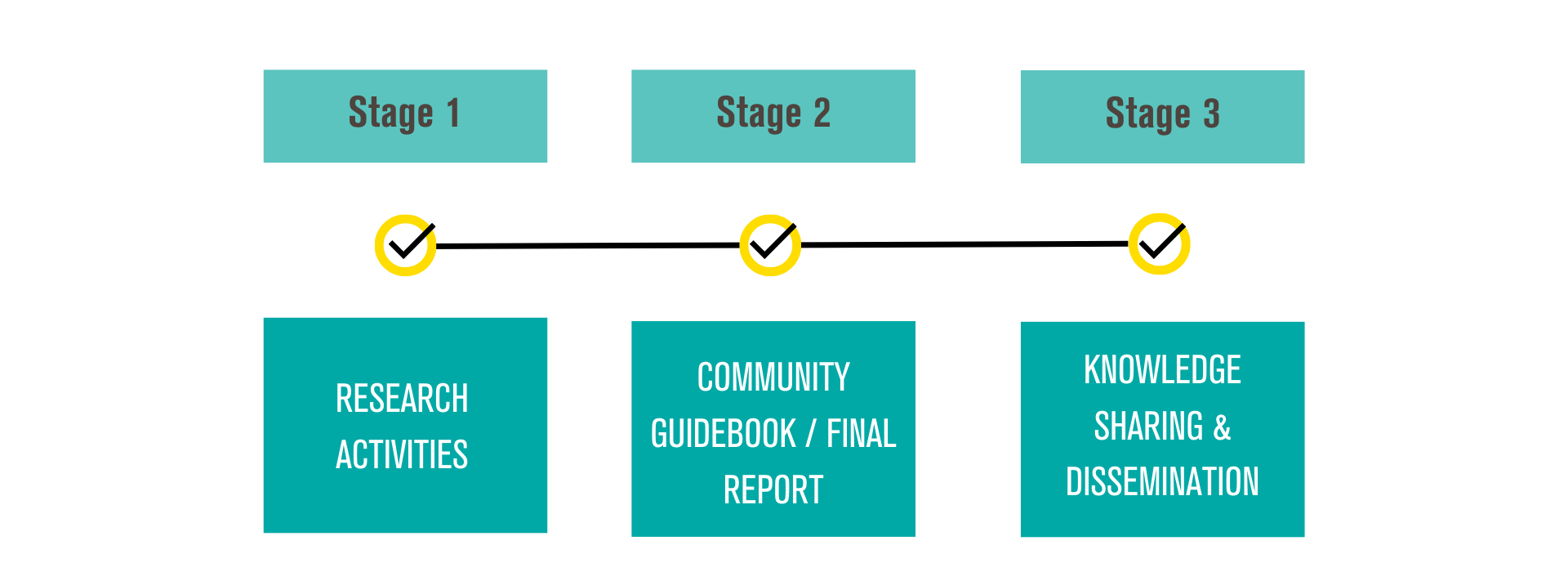
CALENDRIER
RESSOURCES
Co-Authors:
Greg Goubko
Heldagardis Renyaan, QUEST Canada
Executive Summary

Co-Authors:
Greg Goubko
Heldagardis Renyaan, QUEST Canada
Final Report
Project Funder
Renforcer les collectivités canadiennes
QUEST Canada develops and implements programs and projects with the aim to nurture strategic partnerships, facilitate connections, empower community champions, and influence decisions makers, supporting communities across Canada on their pathway to net-zero. Find out more about our programs and projects:
TENs Project Accelerator
QUEST Canada, with the support of the Building Decarbonization Alliance, is launching the TENs Project Accelerator—a structured, multi-phase initiative designed to address this gap by helping communities translate readiness and interest into implementable projects.
The TENs Project Accelerator is a national initiative designed to move Thermal Energy Networks from research into implementation through direct engagement with communities advancing real projects.

Encourager les mesures de carboneutralité dans les collectivités autochtones, rurales et éloignées
Welcome to the national jurisdictional scan, a database showcasing the policies, programs, and enabling conditions that support effective, community-led climate and energy action across Canada.
Pan-Atlantic NCA
QUEST Canada’s Net-Zero Communities Accelerator (NCA) Program has been recognized with a prestigious 2025 Clean50 Top Project Award. The annual awards recognize initiatives based on their innovation, their ability to inform, and to inspire Canadians.
QUEST Canada’s Pan-Atlantic NCA Program enables Atlantic Canada communities to reach net zero by equipping them with the tools and knowledge to develop and implement community energy and emissions plans and understand the net economic benefits they can provide.